Brian Thompson: From the Crouch River to the Cutting Edge of Offshore Sailing
30.04.2026 | News
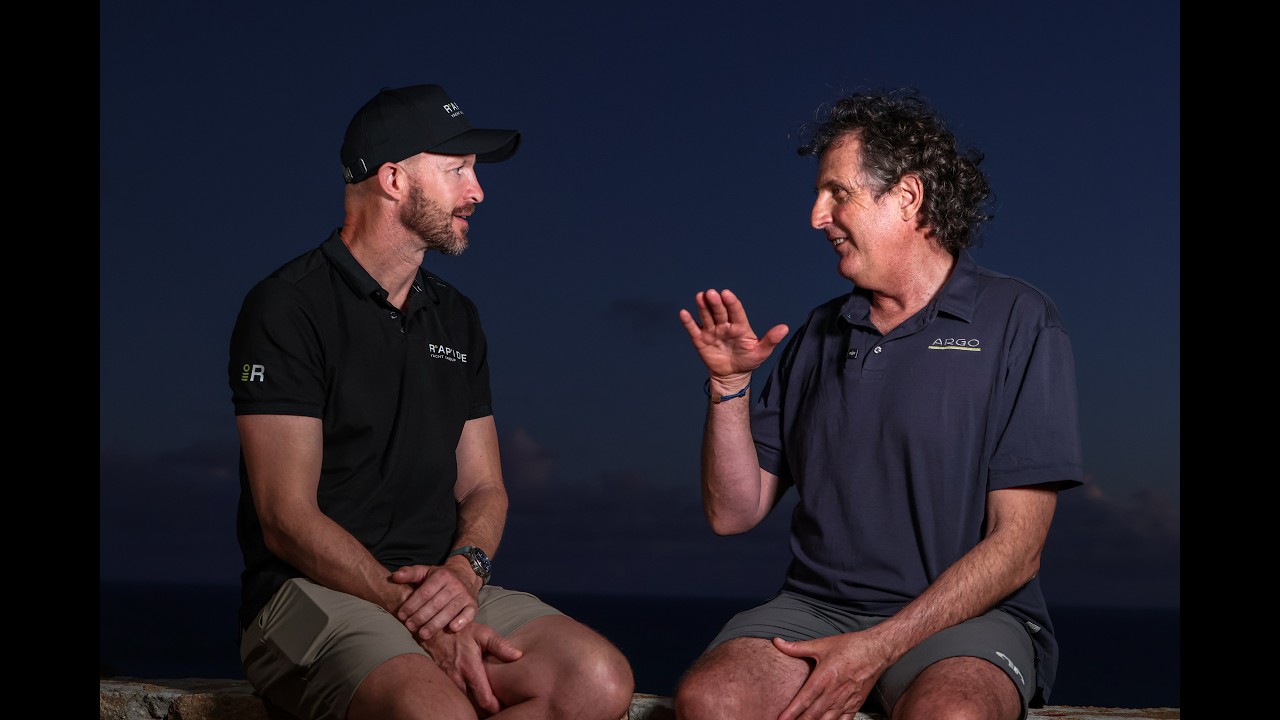

Photo: Liveability Without Compromise
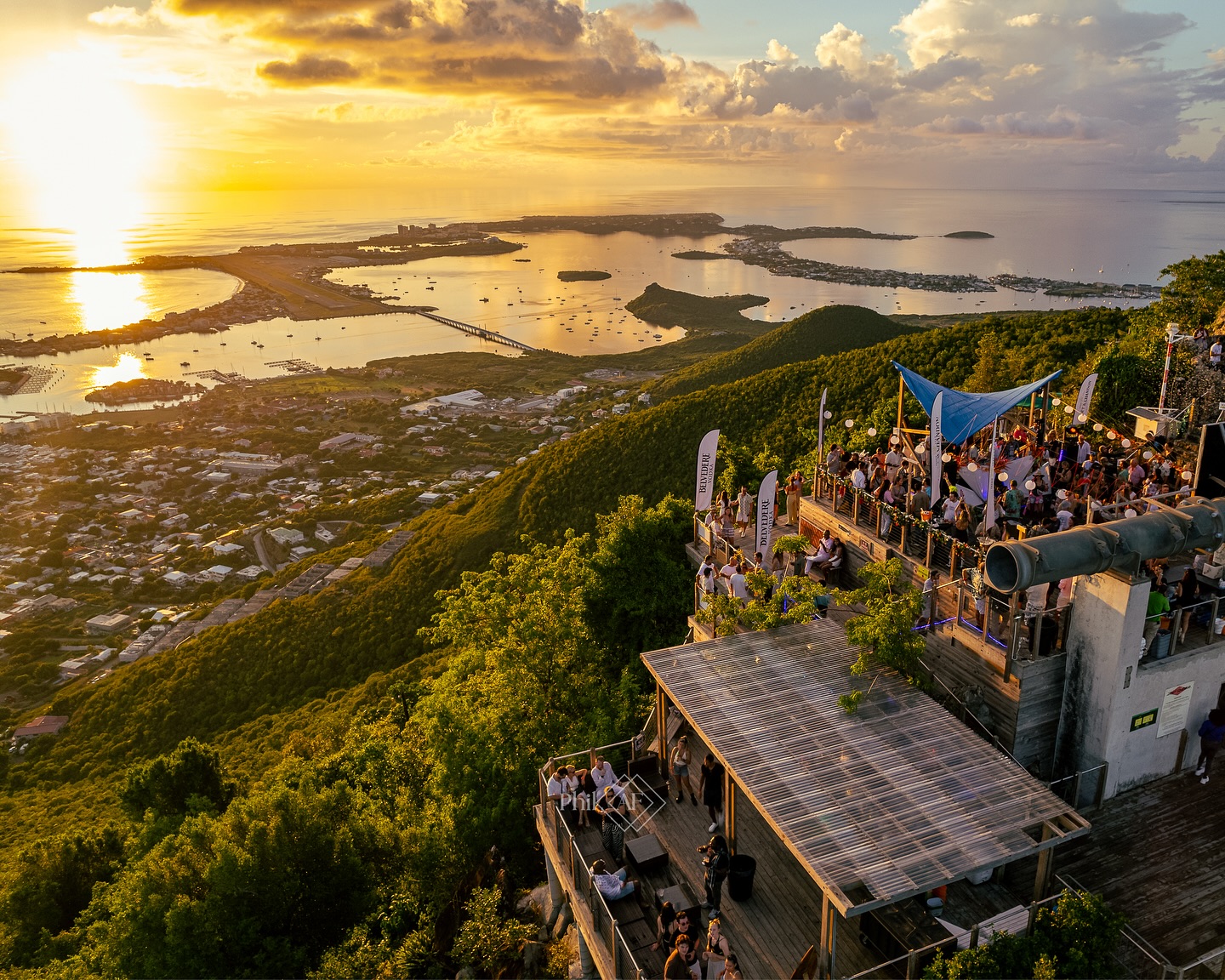
There's a particular kind of energy that defines the Caribbean regatta season. The islands draw some of the most accomplished talent on the water, and during the RORC Caribbean 600 in Antigua, we caught up with Brian Thompson at a relaxed, poolside setting overlooking the beautiful English Harbour as the sun set on the horizon. Generous with his stories, what followed was a conversation that moved from muddy English rivers to Antarctic icebergs, record-breaking ocean runs, and the future of high-performance sailing.
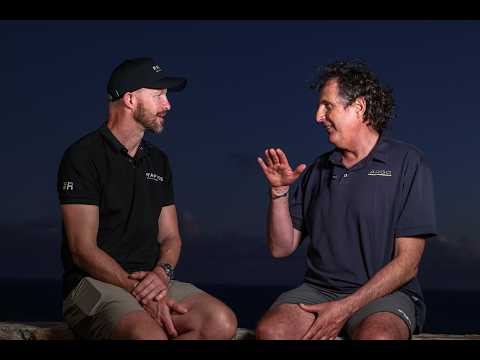
"Take us back to the beginning — where did it all start?”
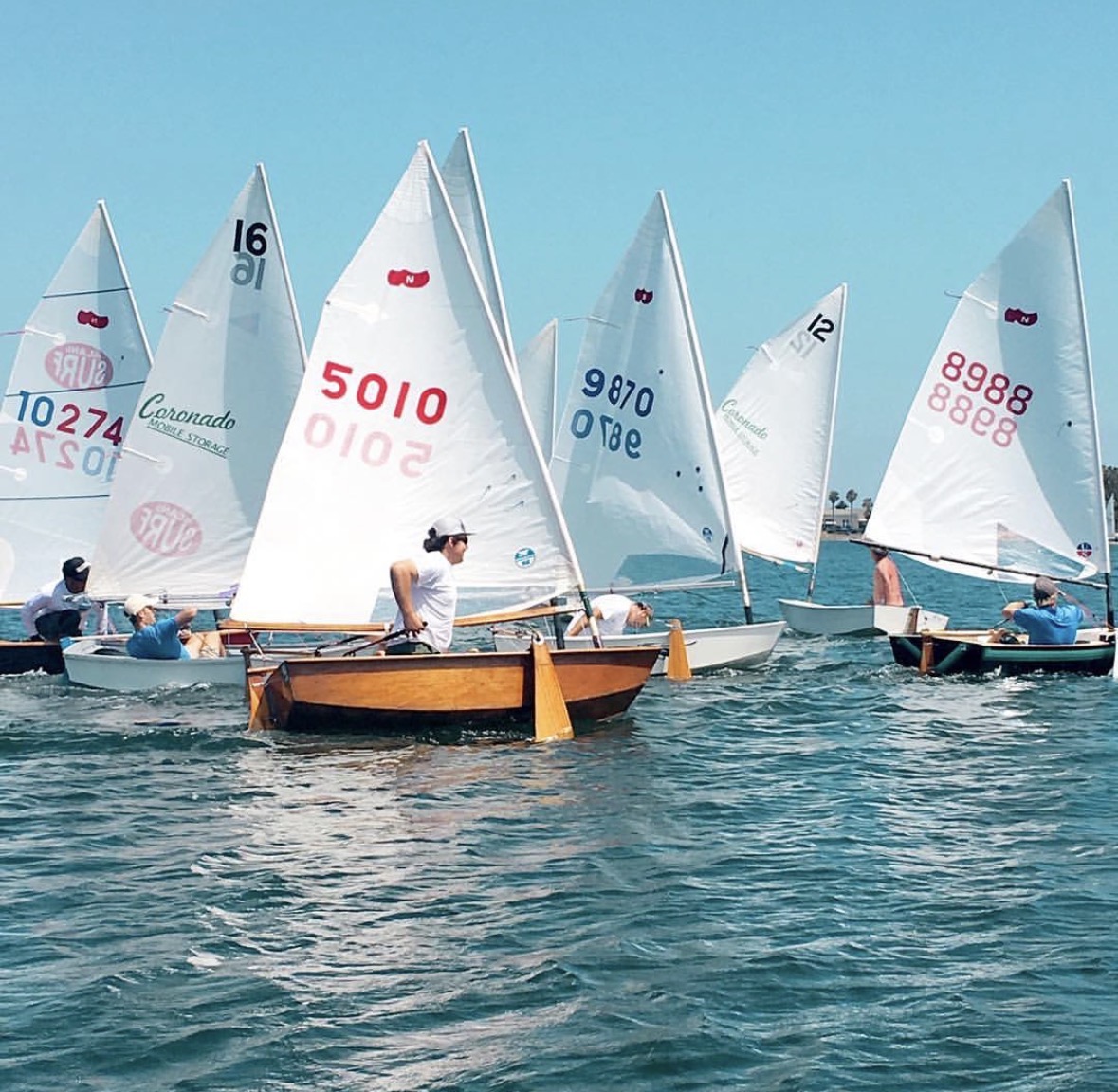
Brian started sailing quite young on the east coast of England, on a river called the Crouch. "Brilliant for learning to sail," he says. "It's muddy and forgiving — you could run aground without consequence. If you hit something you just came to a very soft, slow stop."
As a teenager, long before GPS was standard, he crossed the English Channel with his parents on a 27-foot boat using a radio direction finder. "It always seemed to be foggy wherever we were going," he laughs.
At 21, he crossed the Atlantic on a 39-foot monohull with his family and arrived in the Caribbean, eventually landing in Antigua, where he began working on boats.
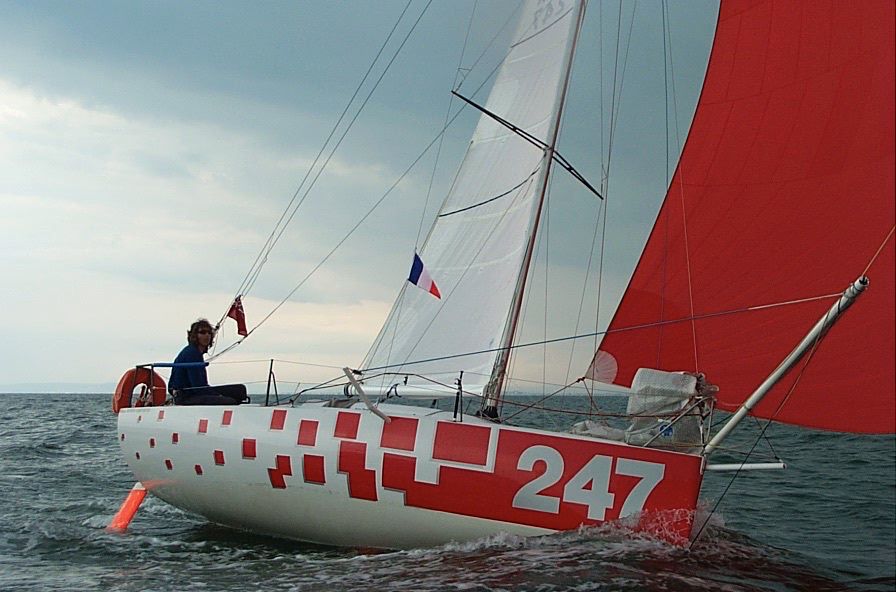
"What converted you to multihulls specifically?"
The move wasn't planned. While in Newport, Rhode Island, Brian watched Philippe Poupon arrive after winning the 1988 OSTAR aboard a trimaran, having crossed the Atlantic upwind in just ten days. "That just seemed mind-boggling," he says. "I thought — that's the way to go. In four years, I want to do that race."
Within four years, Brian entered the same race, sailing a 35-foot Dick Newick wooden trimaran he had bought and refitted himself. "It was yellow and it looked like three bananas," he laughs. He won his class. From there, the trajectory accelerated.
Record-breaking campaigns
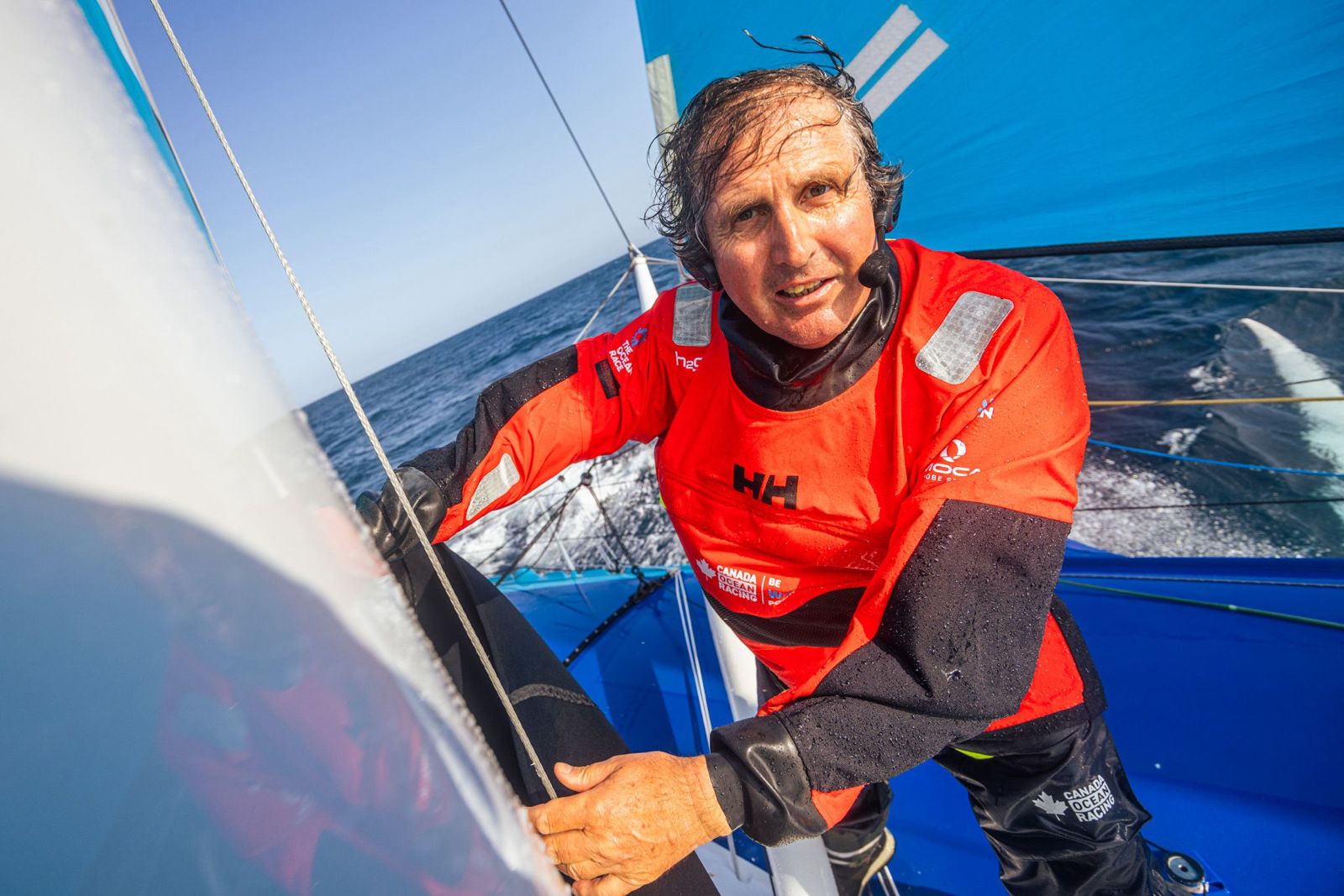
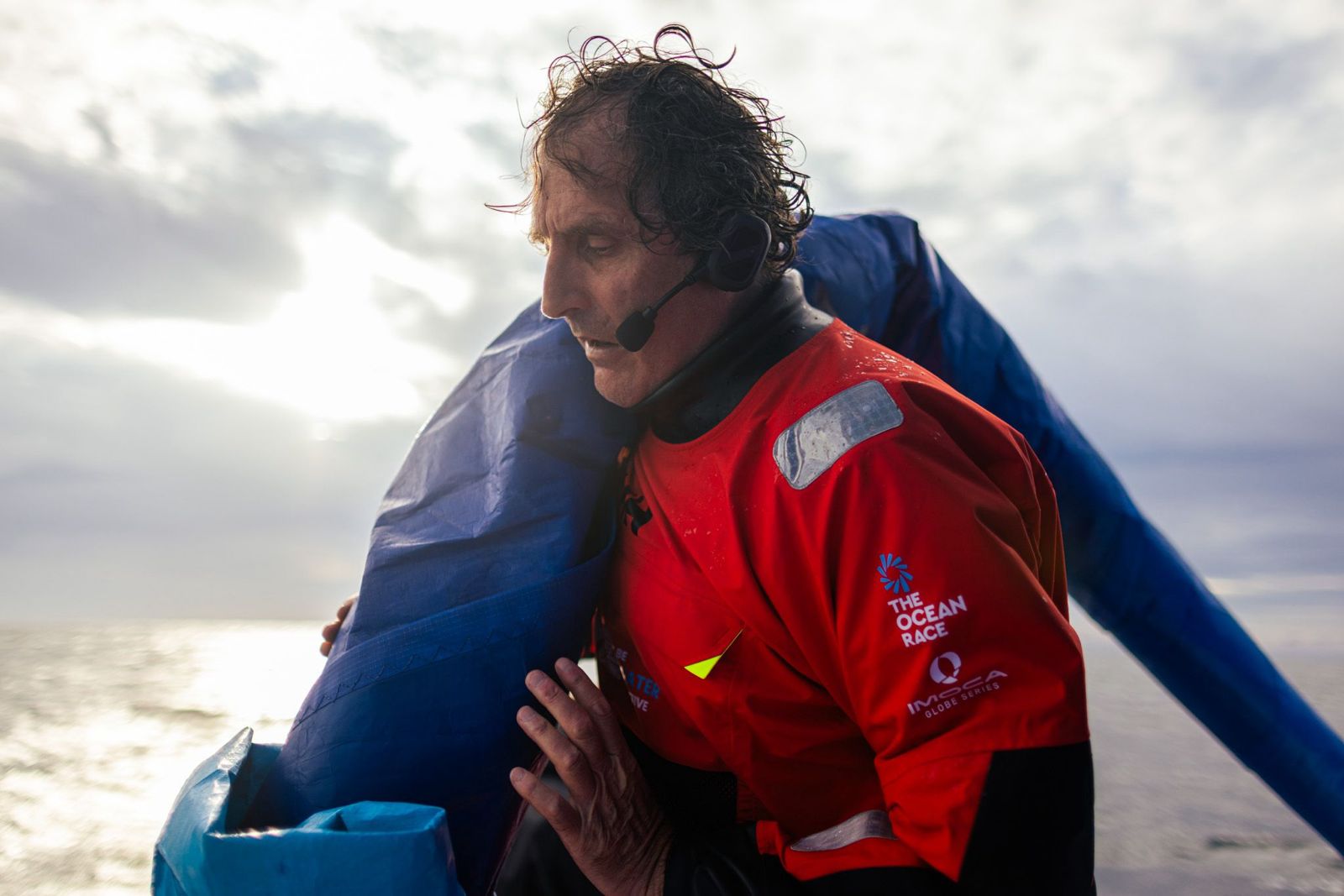
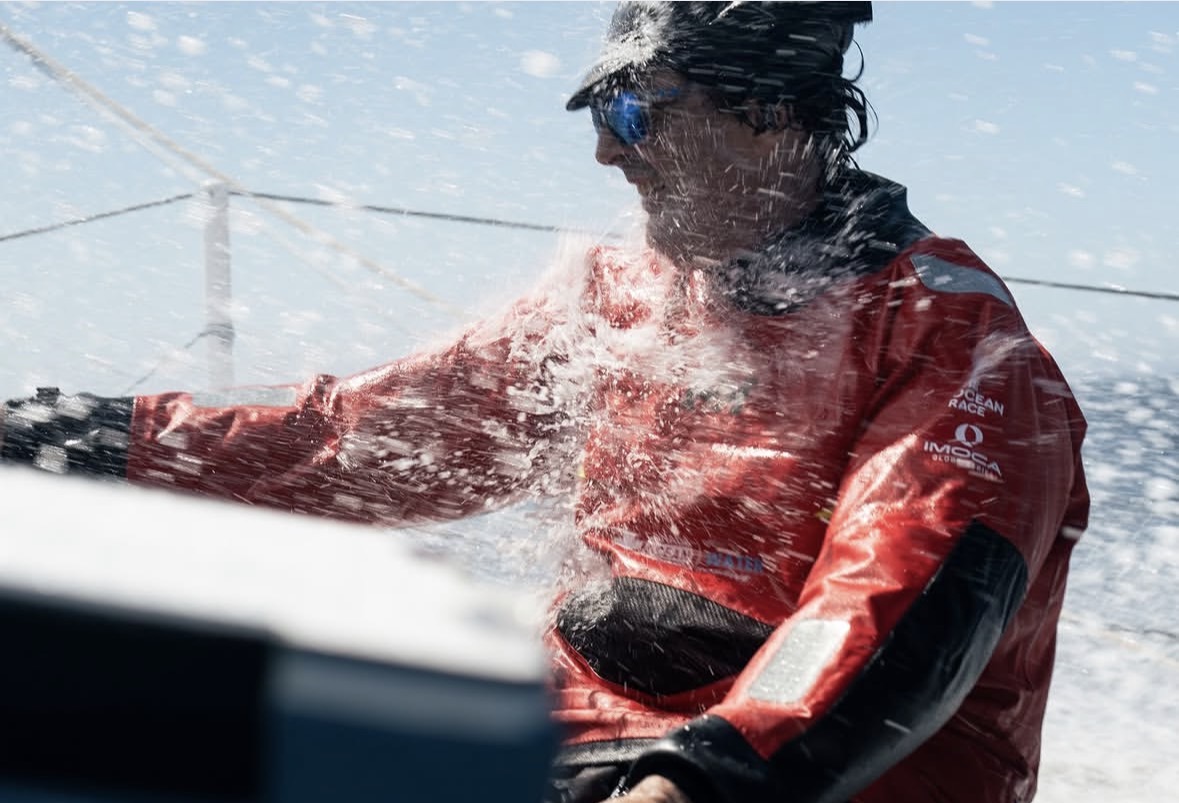
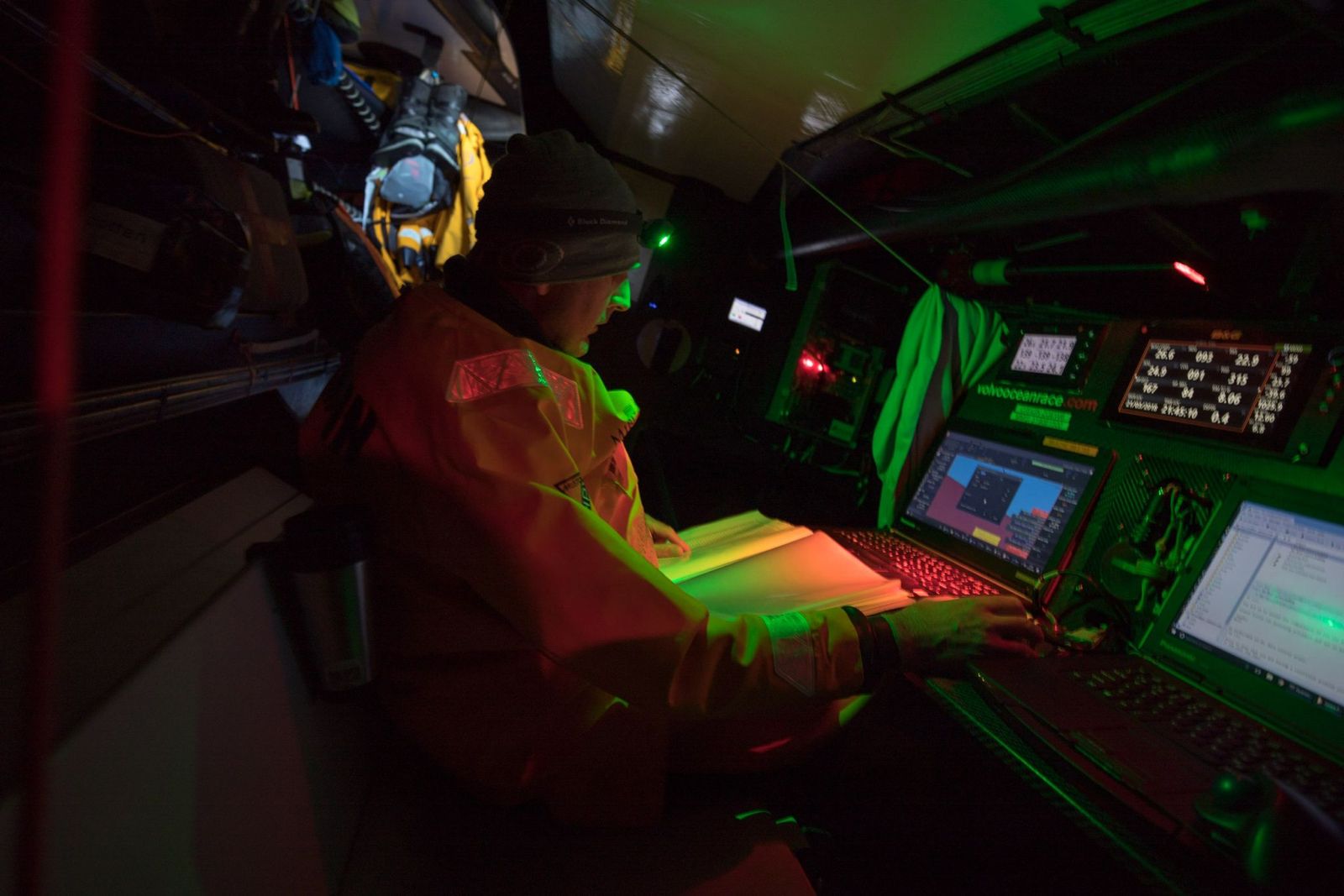
After a two-handed race around Britain, Brian connected with Steve Fossett, joining him aboard the trimaran Lakota. He describes the equivalent of "a couple of hundred thousand miles" alongside Fossett.” Including time on the America's Cup Stars & Stripes catamaran, and through the development and campaign of PlayStation, built in New Zealand, which culminated in a round-the-world record attempt.
"The first English person invited to join the French team for the round-the-world record on Banque Populaire”
"Yes, I was with that team for about two to three years, around 2011 to 2013," he says. After multiple attempts, the team set a new outright round-the-world record of 45 days under skipper Loïck Peyron. Topping the previous record of 48 days by three days. "It really was a magnificent sail around.” Brian became the first Briton to break the round-the-world speed record and did so twice over his career.
"What was the scariest part of that record?”
During the attempt, the crew spent a week navigating iceberg zones as far south as 62° South, just on the edge of the Antarctic Circle, where it never gets fully dark.
We had to slow down to keep an eye on icebergs. There was one bigger than the Isle of Wight… about 100 metres high. It was a very good thing it wasn't dark — we would have run straight into that one. Quite spectacular.
At those latitudes, there is no realistic rescue. You are thousands of miles from land, operating entirely self-sufficiently. "It's about keeping the boat in one piece," he explains. "Something could break at any moment. And you are very far from any rescue."
The evolution of speed
"Right now, you're here for the 600 on a MOD 70 called Argo. Tell us about that boat — and what you've just achieved with her?"
Just a couple of months before our conversation, Brian and a crew of six sailed Argo from the Canaries to the Caribbean in just under five days, the fastest that route has ever been sailed. Average speed through the water: 28 knots. For five days. Across an ocean. "We took six days of food for a transatlantic," he says, smiling. "We finished with a day to spare."
Crew configuration and watch discipline were central to maintaining that pace. Keeping three people on deck at any time, with a fourth able to step in hourly for manoeuvres like jibing. "That meant we could manage fatigue without sacrificing responsiveness when it mattered," Brian explains.
At sustained high speeds, sail handling becomes a different discipline entirely. "Downwind, the gennaker is trimmed quite tight and you're sailing to a fixed apparent wind angle. You're no longer trimming constantly for wave patterns the way you would on a monohull. You’re effectively overtaking the waves." Weight remained a constant constraint. Three bunks, minimal provisions: six days of food planned against a five-day routing prediction. "The objective was to stay as light as possible while maintaining a safe buffer."
"Tell us about the MOD70 itself, where does it sit in the story of multihull development?”
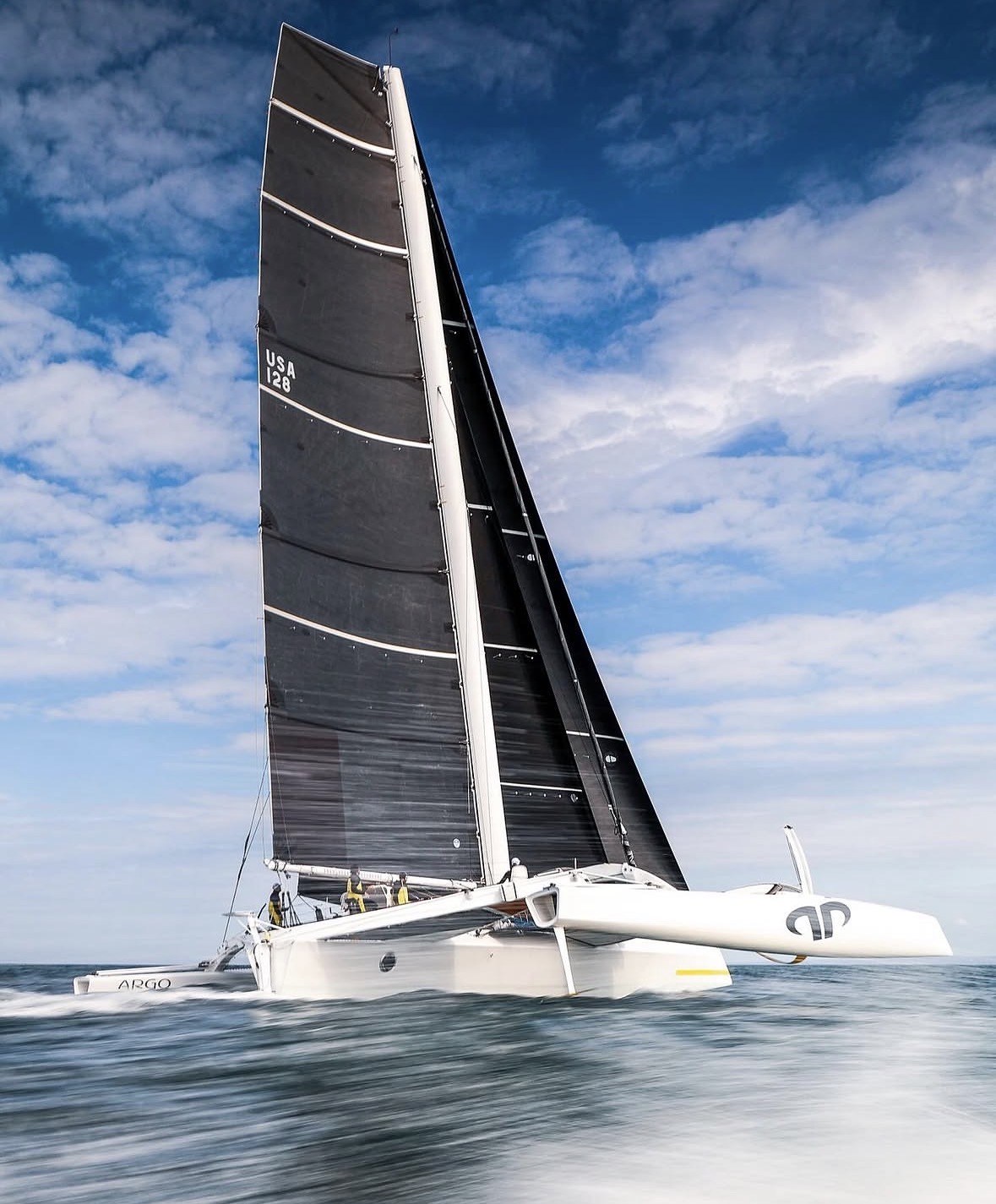
The MOD70 was originally conceived in 2011 as a strict one-design class, seven were built, and all seven are still sailing. It sits at a transitional point in multihull development: evolved from the ORMA 60 class, but conceived before full foiling became the standard. "Those ORMA boats were shorter, wider, with taller rigs," Brian explains. "Renowned for being quick, but also more fragile, and prone to capsizing."
His own experience on the ORMA platform during the Québec–Saint-Malo race, aboard Sergio Tacchini, gave him an early taste of foil-assisted performance. "It had early foils, and downwind performance was exceptional. By canting the rig to windward you increase righting moment, while the foil lifts the leeward hull. That combination made the boat feel both stable and very fast." The MOD70 carries those principles forward within a more controlled and durable package.
On Argo, the leeward side now carries significantly more aggressive foils than the original configuration, along with float rudders. The main lifting foil reduces displacement on the leeward hull, while T-foils manage pitch, controlling whether the boat runs bow-up or bow-down. Rather than active control surfaces, the MOD70 relies on mechanical positioning: moving the entire foil fore and aft changes the angle of attack. "If you want more lift, you adjust its position," Brian says.
Full flight, however, remains out of reach. The main hull carries significant rocker — curved and relatively deep. "When you lift the leeward hull, the central hull stays engaged in the water. You're reducing drag on one side but increasing it on the other. It's always a compromise."
"And the Ultims — how different is that world?"
The contrast is stark. Modern Ultim trimarans are designed specifically for sustained full-flight conditions, T-foils on the central daggerboard and rudder, combined with flatter hull shapes and far less rocker. "That allows them to lift the main hull as well as the leeward hull, effectively flying clear of the water and minimising drag across all surfaces." The performance gap reflects those design choices directly. "Ultims can reach 45 knots. On Argo, we're typically operating in the 30 to 35 knot range."
But Brian is pragmatic about what that gap means in practice. Records are still being broken, just in smaller increments, with greater investment and precision weather routing required for each attempt. "It's like the 100-metre sprint," he says. "You're not going to take huge chunks off anymore."
Sail development
Brian has also been deeply involved in sail development with Doyle Sails Solent, combining hands-on racing experience with technical innovation. On Argo, a mixed inventory between Doyle and North has been developed, and work extends across the Gunboat 80 Agave, Gunboat 68 Little Wing, and the Gunboat 72 Leila.
A key focus has been the structured luff, a new spinnaker design with a reinforced leading edge built from high-strength Stratis material rather than traditional nylon spacer cloth. "It allows you to sail tighter angles and still go downwind, without worrying about the sail blowing out, because the most loaded part is reinforced." A new hybrid fabric, already proven in the Maxi72 fleet, is now moving into performance cruising multihulls."It's stiffer, lighter, stronger, and longer-lasting," he notes, adding that Mylar laminates, long a standard, are beginning to show their limits. "Over time, we'll likely see less of it."
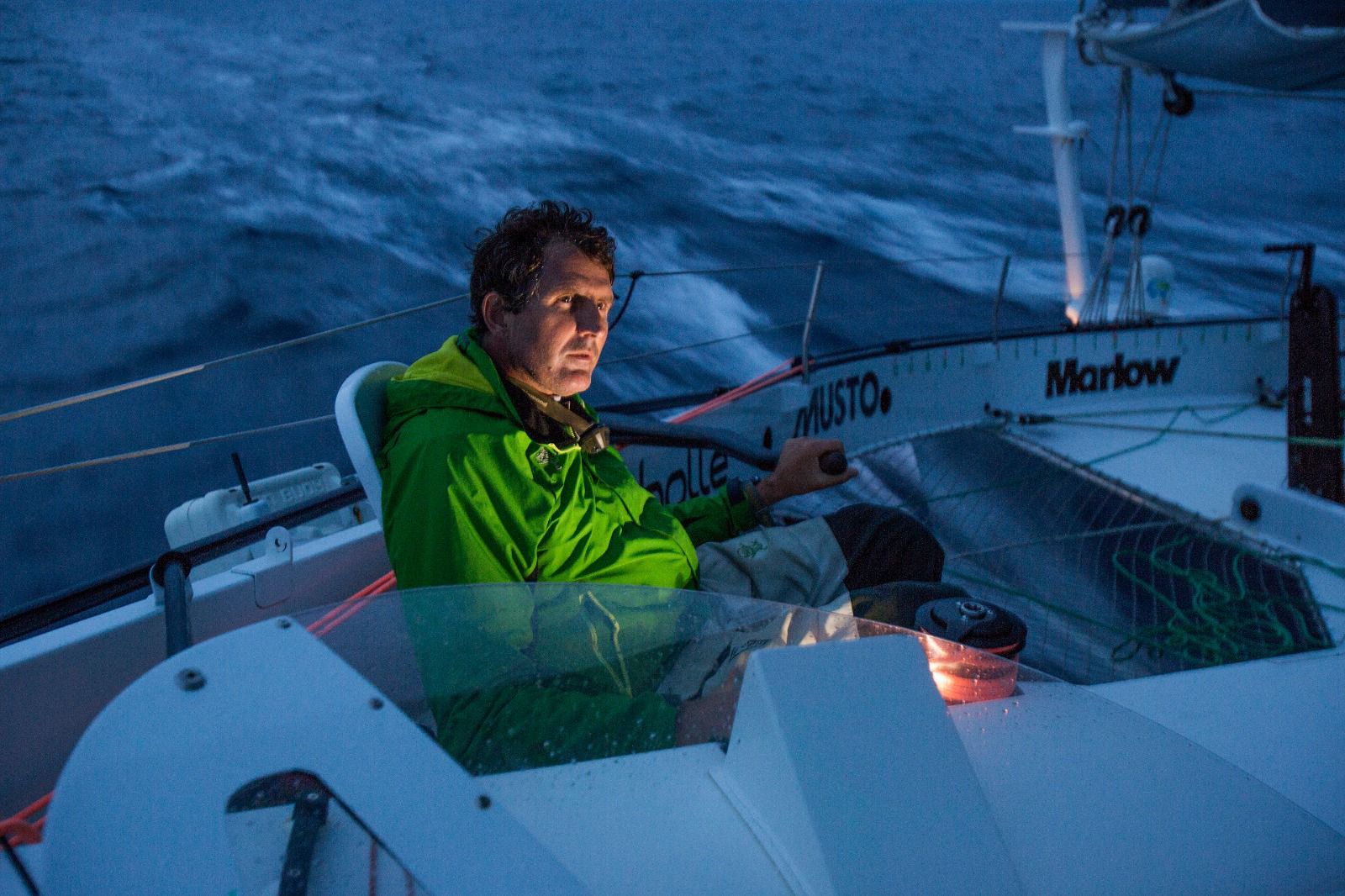
"The performance multihull world feels like it's growing again — what are you most excited about?”
Brian's enthusiasm here is infectious. He talks about the new generation of Gunboats — the 68, the 80, the flybridge 72 — and the dual-purpose dream they represent: part superyacht, part race machine.
"You can cruise beautifully, then race hard. Blend the two. A bit of superyacht, a bit of adrenaline."
He speaks warmly about the HH66, a boat he's raced against multiple times. "Very powerful, very fast, and yet super comfortable. A Le Mans racer you can take to the shops." For many, though, it's a steep learning curve.
"It's like stepping from a road car into a race car, on a wet track.” he explains.
"You need to understand where the limits are, and how to approach them safely.”
As the last light slipped below the horizon and English Harbour faded into dusk, Brian leaned back with the easy confidence of someone completely at home in this world—or rather, on it. Decades of ocean miles, record-breaking campaigns, and close encounters with Antarctic icebergs haven’t made him more cautious. If anything, they’ve had the opposite effect.
There's never been a better time to get into performance multihulls. Nothing beats doing 23 knots through warm Caribbean water and watching someone discover what sailing can really be.
We’ve only scratched the surface here. Head to our YouTube channel for the full interview with Brian, where he dives into the technicalities and shares the stories behind it all.
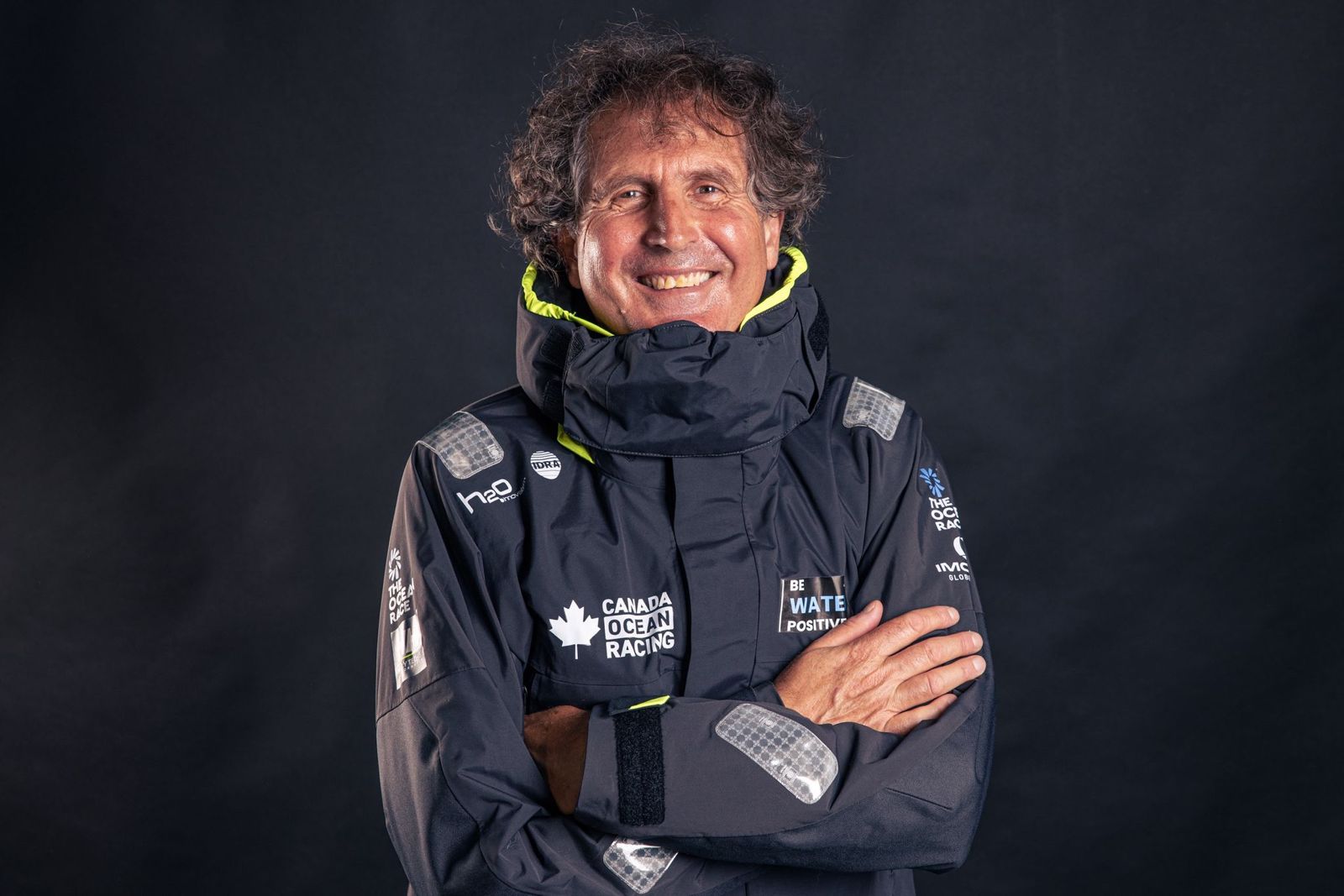
— Brian Thompson, English Harbour, Antigua
01° 24' 37" N, 45° 45' 46" E
Stay up to date with our latest news
Other Articles